
Hedges That Maintain Density Without Gaps
Hedge trimming in Tallahassee for properties with overgrown hedges, uneven growth patterns, or hedges losing interior foliage
Hedges that develop sparse interiors or irregular profiles indicate trimming approaches that remove too much foliage at once or cut into wood that no longer produces new growth. BV Landscapes LLC trims hedges in Tallahassee using techniques that preserve interior branching and maintain the leaf density required for privacy and windbreak function. You need this service when hedges show gaps along the bottom, when tops grow faster than sides create pyramid shapes, or when previous trimming has left hedges wider at the top than the base—a structure that shades lower branches and causes dieback.
Proper trimming maintains a slightly tapered profile that allows sunlight to reach all foliage layers, encouraging growth from the base upward. In Tallahassee's climate, hedges grow aggressively during warm months and require trimming that removes new growth without cutting into older wood where many species won't regenerate. The process removes the outer growth layer while preserving enough leaf surface to support photosynthesis and continued branching, preventing the hollow, leggy structure that results from excessive or poorly timed cuts.
Arrange a property visit to evaluate hedge condition and discuss a trimming schedule that maintains fullness throughout the year.
Our Services
How Regular Trimming Preserves Interior Growth
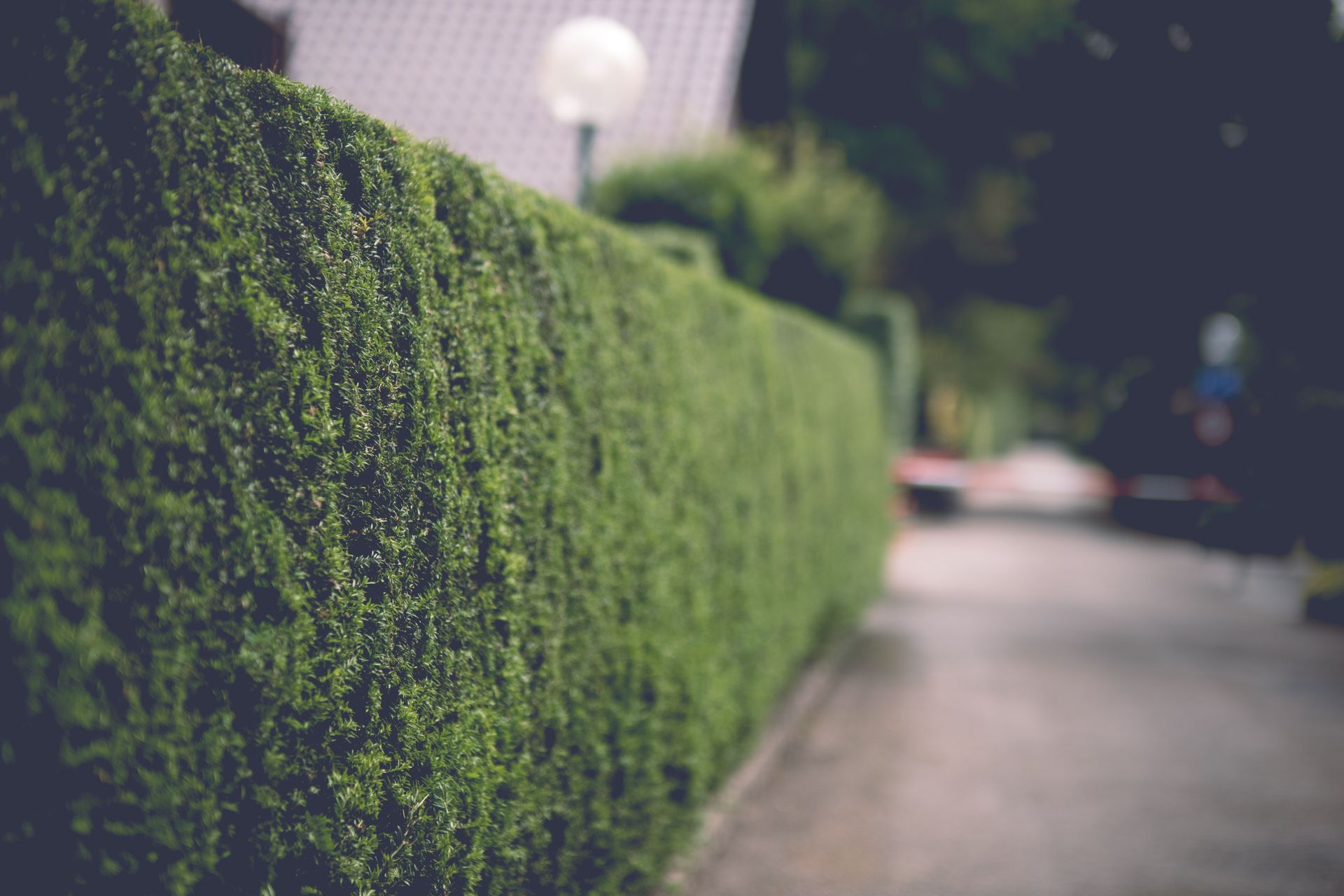
Trimming removes the current season's growth before it extends beyond the desired hedge profile, using sharp blades that make clean cuts rather than tearing foliage. Cuts are made just above growth nodes where lateral branching will develop, and the hedge is shaped to maintain a wider base than top. This approach keeps sunlight reaching interior branches, which remain active and produce the dense foliage mat that defines a functional hedge.
After consistent trimming, you notice hedges that remain dense from ground level to the top, uniform color across the entire surface indicating healthy foliage throughout, and growth that fills in quickly between trimming cycles without becoming unmanageable. Hedges maintain their intended height and width without developing bare patches, and the overall structure remains balanced rather than top-heavy or sparse at the base.
Trimming frequency depends on hedge species, desired formality, and growth rate—fast-growing species like privet or ligustrum may require trimming every six to eight weeks during active growth, while slower species like holly or viburnum maintain shape with less frequent attention. Hedges used for screening require more frequent trimming to maintain density, while hedges serving as background plantings can tolerate more relaxed schedules.
Common Questions About Hedge Maintenance
Homeowners often ask about trimming practices before establishing maintenance schedules, particularly when hedges have developed structural problems from inconsistent care.
What causes hedges to lose foliage at the bottom while remaining full at the top?
Top-heavy hedges shade their own lower branches, and when the base is narrower than the top, insufficient light reaches lower foliage—this causes dieback that cannot be reversed without severe pruning to reshape the entire structure.
How much growth should be removed during each trimming session?
Removing only the current season's growth—typically two to four inches depending on species and time since last trimming—maintains density without stressing the plant, while cutting deeper into older wood risks creating gaps that take multiple seasons to fill.
When is the best time to trim hedges in Tallahassee?
Trimming during active growth periods from spring through early fall allows hedges to recover quickly and fill in between sessions, while trimming during winter dormancy reduces the frequency of maintenance but may leave cut edges visible longer before new growth conceals them.
Why do some hedges brown after trimming?
Dull blades crush stems rather than cutting cleanly, causing tissue damage that turns brown as it dies back—this is particularly visible on fine-textured hedges where individual leaves show damage, and it indicates equipment maintenance issues rather than improper technique.
How can overgrown hedges be restored without removing them entirely?
Gradual reduction over multiple seasons brings height and width back to manageable dimensions while preserving some foliage at each stage—severe cuts that remove all green growth often result in hedge failure because many species cannot regenerate from bare wood.
BV Landscapes LLC maintains hedges based on their species, growth habit, and function in your landscape. Contact us to establish a trimming schedule that prevents overgrowth before structural problems develop.