Hold Soil and Shape Space on Sloped Ground
Retaining Walls in Tallahassee for managing elevation changes and preventing soil movement on slopes
BV Landscapes LLC builds retaining walls for residential and light commercial properties across Tallahassee. You need this service when your yard slopes unevenly, when soil erodes or shifts downhill, or when you want to create level areas for planting, patios, or walkways. Retaining walls are structural barriers that hold back soil, stabilize grade changes, and allow you to use more of your property without losing ground to erosion or collapse.
Slopes become unstable when water saturates soil or when vegetation fails to anchor it. Without support, soil moves downhill during heavy rain, leaving exposed roots, bare ground, and uneven surfaces. Retaining walls address this by creating a vertical or near-vertical barrier that contains soil while allowing water to drain through or around the structure. In Tallahassee, where storm seasons bring sustained rainfall, proper drainage behind the wall prevents hydrostatic pressure that can cause failure. Walls also expand usable outdoor space by turning steep grades into terraced levels suitable for gardens, seating, or recreation.
If your property has slopes that erode or areas where you want to add usable flat space, schedule a retaining wall consultation in Tallahassee.
Our Services
How Retaining Walls Are Built and What Changes
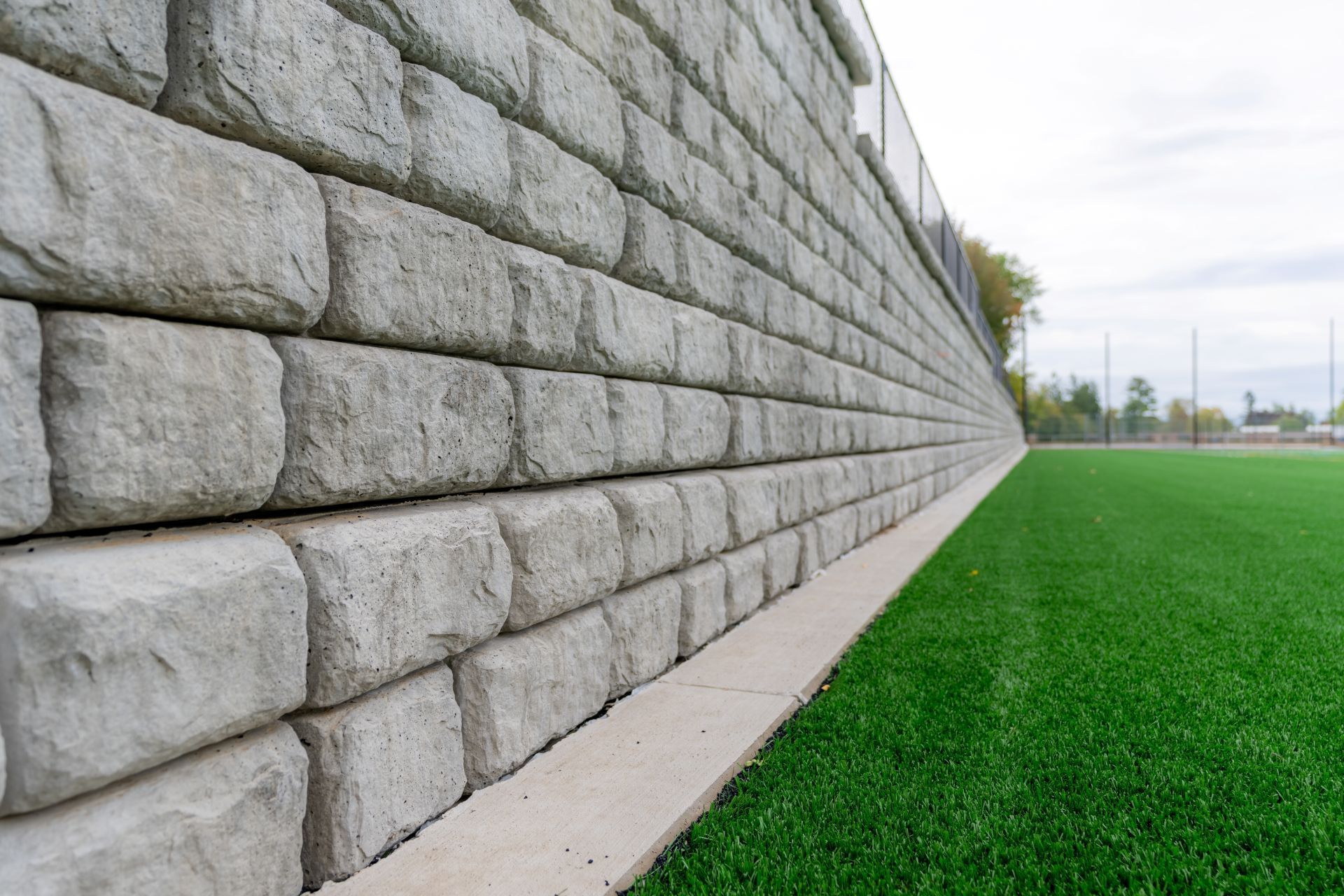
Construction begins with excavation at the base of the slope to create a level footing. The crew sets the first course of blocks or stone on compacted gravel, checking for level and alignment. Each subsequent course is staggered and locked into place, with drainage aggregate placed behind the wall as it rises. Geotextile fabric is often installed to separate soil from drainage material and prevent clogging. The wall is backfilled in lifts, compacted at intervals to ensure stability.
Once the wall is complete, the slope is no longer visible from the front, and the retained soil stays in place even after heavy rain. You gain a defined edge where the wall meets the grade, and the area behind it can be planted, mulched, or sodded without concern for washout. Terraced walls create multiple flat zones, each held by its own structure. BV Landscapes LLC selects materials based on the wall height, soil type, and visual goals, ensuring long-term performance without frequent maintenance.
Retaining walls do not eliminate the need for drainage elsewhere on the property, especially if runoff originates upslope. Walls over a certain height may require engineering or permits depending on local codes. The structure itself is durable, but plantings near the wall may take time to establish, and you may need to adjust irrigation to account for the new grade.
Questions About Retaining Wall Installation
Property owners often want to know how tall a wall can be, what materials work best, and how long construction takes for a typical project.
What is the maximum height for a retaining wall without engineering?
Walls up to three or four feet are typically built without formal engineering, but taller walls or those holding saturated soil may require structural analysis and permits in Tallahassee.
How do you prevent water from building up behind the wall?
A layer of crushed stone or gravel is placed directly behind the wall, and weep holes or perforated drain pipe at the base allow water to exit rather than accumulating pressure.
What materials are used for retaining walls?
Common options include concrete blocks, natural stone, and timber, with selection based on wall height, aesthetic preference, and budget.
How long does it take to build a retaining wall?
Most residential walls are completed in two to five days depending on height, length, and site access, though larger or tiered walls may take longer.
Can you build a retaining wall on a property line?
Walls near property boundaries require confirmation of easements and setbacks, and you may need neighbor agreement if the wall alters shared drainage or grade.
If you need to stabilize a slope or add usable space to your property, contact BV Landscapes LLC in Tallahassee to discuss retaining wall options and site-specific requirements.